

"Given how broken things are with the industry and distribution, I think it’s madness not to experiment."
A conversation with Alain Martin, writer/director of "The Forgotten Occupation"

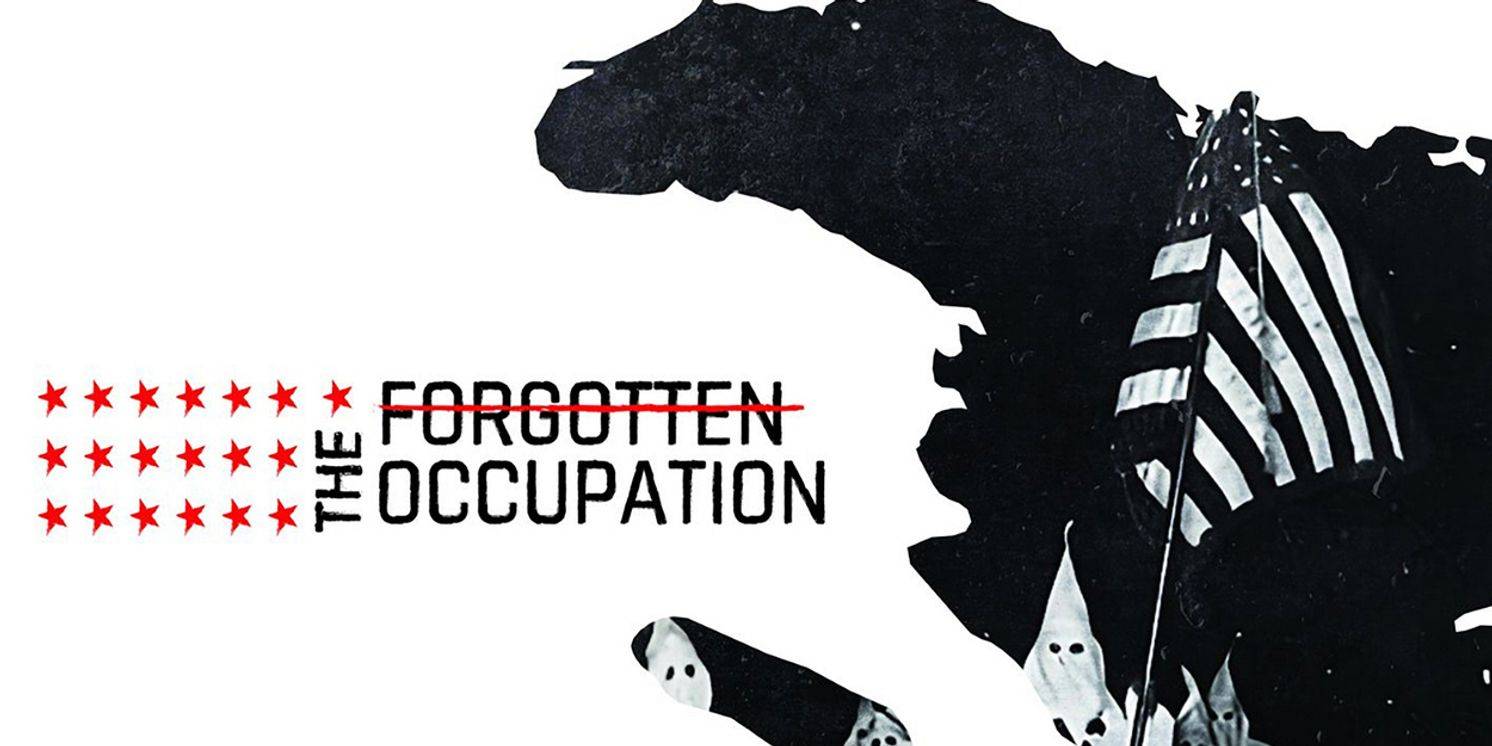
Alain Martin and I met at an IRL Filmstack event. His feature directorial debut “The Forgotten Occupation: Jim Crow Goes To Haiti” officially premiered in 2023 at the Art of Brooklyn Film Festival. Monkey Wrench Films acquired the doc’s digital and theatrical rights and Good Docs acquired educational rights. Alain has been on the road for the past few months touring the film. I’m honored he was able to find a moment in his packed schedule to talk with me.
Adam Kritzer: Alain! Thanks so much for making the time to chat. You're a busy guy these days. Tell me a bit about your new documentary, The Forgotten Occupation.
Alain Martin: Yeah, so the doc is like this personal meditation on the U.S Occupation of Haiti from 1915 to 1934. The film is a bit experimental. It combines autobiography with cinema verite and the historical documentary genre. That shit wasn’t supposed to work! We have that experimental style because I went into this with no preparation, no planning, no nothing. It was on-the-go filmmaking and we paid the price, both in time and in post-production. The film really wasn’t supposed to work! I remain in a state of shock audiences have been reacting to it the way they have been.
We called it The Forgotten Occupation because, well, it’s a completely forgotten episode of both Haitian history and American history, and to the extent it’s remembered, people don’t treat it like the seminal event that it was. I mean, the Haiti of today is only the Haiti of today because of that occupation, and that occupation itself was going to be the blueprint for America’s colonialist expansions for the remainder of the 20th century. A lot of things they did in Haiti, they would later do in Vietnam, in Iraq, in Afghanistan. It’s crazy that historians don’t even treat this event like a footnote. This was the second-longest occupation of a country by the United States; Afghanistan beat it by a year. I think the title is very fitting.
AK: It is daunting to tackle such a complex and thorny topic, especially for a first feature. I think the personal, autobiographical elements of the documentary function as an entry-point and framing device for the historical and socio-political thesis of the work. The film is presented and structured as a letter to your grandfather — who is no longer alive — and your relationship with him becomes more complicated as the story progresses.
Can you speak more about the process of making the film, and specifically about figuring out how to tell the story? Was the movie initially about Haiti, about your grandfather or did you start out knowing that each was a window to the other?
AM: The bare truth is this: I just knew I was going to make a movie about the U.S occupation. Without planning the details, I was confident it would be a dope-ass project. I was naive about art and film. I thought substance was enough and execution was secondary. I did no location scouting, no pre-production prep, no figuring out how the film was going to look. I assumed hiring the right DP and editor would magically give my movie the right aesthetic and feel, and that the subject matter was compelling enough to overcome any deficiency on the artistic and technical side. My job was to find people to interview and get them to answer questions about this important topic.
It was like October 2016 when I had my first rough cut. Went to Starbucks all happy, getting ready to watch my masterpiece.
Bro. That shit sucked. It was bland. No life.
I felt myself panicking: questioning and doubting myself. Maybe I was talentless and had believed hype I invented in my own head.
I was down for a couple of weeks. I thought maybe a different editor would save it. I went through like four of them but the movie still sucked.
I decided to take a break and spent like two years doing nothing but watching docs all day and night. I would watch the same docs over and over sometimes. It dawned on me that many of these docs worked because they were personal and honest.
So the question became: how do I make a fact-forward personal doc that is both honest and engaging?
The whole time I had been thinking about my grandfather. He raised me and knew I wanted to be a filmmaker. His love of America is what got me into movies. He was always watching a bunch of Charles Bronson and Clint Eastwood flicks. I think these dudes for him represented the quintessential American ideals.
So here I was, decades later, making a film criticizing the country he loved. How would he feel? So I said, man, let me write him a letter and have that be the through-line of the film.
AK: Embracing the complexity of people and places we love is essential and powerful but also very difficult. I think it’s human nature to choose a simple lie over the more complicated truth. I appreciate how your work lives and thrives in the complexity and avoids easy answers. Which filmmakers and/or films most informed and inspired your process between your first rough cut (October 2016) and picture lock?
AM: Thank you for saying that. In terms of filmmakers and films that inspired this process: too many to name and remember, but let me give it a shot.
In The Year of The Pig is one movie I watched a lot. The portrayal of the peasants and their relationship to the land inspired how I wanted to center the Haitian peasants in my film. The opening for that movie is insane. The use of sound: holy shit, man! I must have watched that opening fifty times. I tried to mimic it to open my own film but failed miserably.
The Battle for Chile by Patricio Guzman. That film was important to me in terms of popular resistance against structural power, something I would also explore in my documentary.
Alain Resnais’ Night and Fog is a film I distinctly sought out given its subject matter. I was curious to see how he treated and represented the brutality of the Holocaust on film because I had been struggling with how to depict the violence of the occupation in my movie.
Errol Morris of course is my man. The Thin Blue Line was on constant repeat in terms of setting the mood for a film. And A Brief History of Time is pure dopeness. Let’s face it: unless you’re a geek or a nerd — which I am sometimes — astrophysics ain’t exactly exciting. Somehow Morris manages to make it exciting, which is a tremendous feat!
Which brings me to Ava Duvernay’s 13th. I read an interview where she said the challenge in making that film was keeping the audience engaged with a serious topic for two hours. I was constantly thinking about that when making my movie.
Sarah Polley’s Stories We Tell and Sandi Tan’s Shirkers were at one point on repeat in my house. Those movies convinced me that my documentary, to work, needed to be personal, vulnerable and inviting.
And then there is Letter to Jane by Jean-Luc Godard, which fascinates me endlessly. The film uses that same picture of Jane Fonda over and over and sometimes it is on the screen for long stretches of time. And Godard can be heard talking, commenting on the film he is making. That doc for me violates so many rules and it made me realize it’s okay to violate the rules as long as your shit is still dope in the end.
Anyways, I’m rambling. I will close this out by saying Chris Marker’s Letter from Siberia and Ken Burns’ Civil War are the direct artistic ancestors to this film.
AK: Movies tell us how to make them, but only if we speak their language! All that work leading up to your disappointing Starbucks screening was absolutely essential because it helped you get a clear grip on what you didn’t know. Your process speaks to the importance of trial-and-error: trying stuff, making mistakes, reflecting, learning and evolving as an artist.
And now you’ve spent the past 2-3 years bringing the movie to audiences, and the film rights have been acquired. Can you tell me a bit about your distribution journey so far?
AM: Thank you for saying that. Because I was so afraid of making mistakes, of making a bad film, I was frozen for a moment. I was even scared to watch the different cuts we had. In the end, it is indeed about trial-and-error, just trying stuff.
As fas as the distribution journey goes, I was not prepared for it. When I was stuck in the filmmaking process, I left social media to focus on the film. During this time, the distribution landscape changed dramatically. I went into distribution living in Lalaland.
I thought I could submit an unfinished film to a festival, and some important person would see it and say “hey, that was dope, let me take this off your hand and finish it and bring this out to the world”. I spent thousands of dollars submitting an unfinished film to a festivals. Man, I feel so dumb as I’m talking to you about this.
I thought the art-world operated fairly — on meritocracy — and that if your work is good enough, you get in. That’s not how it works. That’s not how the world works. You need connections, my man! You need to know people; your dope shit ain’t enough. I got over 50 film festival rejections and was crushed. I thought maybe my movie sucked. I didn’t know what to do. But I didn’t give up. I called people, sent emails, read filmmaker testimonies, listened to podcasts. I needed to find a breakthrough.
A professor in the film, Felix Jean-Louis, invited me to screen the film for his staff at UC Irvine out in Cali. That screening became something of an urban legend within the small Haitian Academic world, and people just kept talking about it. That led to a screening at the Woodrow Wilson house in DC. We played to a crowd of 35 people, and the reaction to the film added to its reputation. Then the Haitian Studies Association hosted an online screening that was attended by 73 people. The great majority of them went bananas for the film and that led to eighteen months of touring the film to universities, libraries, museums, civic organizations, churches and film societies. I ended up in some American cities I never knew existed. I used the money I made from those screenings to properly finish the film.
But I still wasn’t satisfied. I wanted more, you know? A bigger audience, that golden ticket. I refused to let go of my dream. Our (future) distribution company, Monkey Wrench, saw the film and acquired the rights. They got Roxane Gay to come on as an Executive Producer, and hired a publicist for the film. That’s when I got to see how the game is really played. Roxane’s name elevated us to a new audience, got us booked in L.A for three weeks at the Lumiere. Then we played at the Denizen Theater for three days. We played at O Cinema for a week. We hosted sold-out premieres in L.A, Miami and New York. Our publicist got us some really good press. This last leg of our distribution journey brought us a larger audience and more awareness. As I talk to you, the film is now available on TVOD, AVOD, SVOD, EVOD in about 80 countries. And we plan to continue doing in-person screenings. We already have additional screenings booked for Miami, New York, New Jersey, Switzerland, Norway and Amsterdam. Not sure how we are doing on the streaming platforms.
I feel humbled. I don’t feel successful. The film still has a ways to go. Given how broken things are with the industry and distribution, I think it’s madness not to experiment. One person who came to my screening in L.A told me that my distribution journey needs to resemble my filmmaking journey, that I need to try different things, think outside the box. Man, I felt that. So I plan on continuing to experiment with this. My peoples in the Caribbean have not seen this yet, my peoples in Latin America, in Africa. I don’t care how long it takes. I’m gonna get this to them.
“The Forgotten Occupation” is currently available to rent, buy and stream on all the major platforms. Follow Alain on Substack and Instagram to learn about upcoming screenings and support the film.
AMAUTEUR Bulletins
The Reunion Lab was super inspiring. Thanks, Sean Glass and Reunion, for having me. Lotsa fun chatting with Alex Rollins Berg, Mike Hogan and others. Nice write-up of the event by Mike in Filmmaker Magazine. This is just the beginning.
Cocoon at the Paris. Yes, please. This movie is hard to find, and rarely screens. I haven’t seen it since I was a kid and I’m excited to revisit it. I’ll be at the screening on May 17 if anyone wants to join.
AMAUTEUR is hosting a bigger-than-usual Filmstack meet-up during the first weekend of the Tribeca Film Festival. The goal is to start building connections between filmstackers and like-minded film people not on filmstack (yet). Saturday, June 6 from 1:30-4:30pm in Tribeca (RSVP for exact location). Free with RSVP on Partiful (donate what you choose).
NYC’s newest micro-cinema kicks off on June 11, created and curated by Filmstack’s very own Alan McIntyre and WTF-Stop Camera Club. It’s in a garden on the Lower East Side! NYC-specific shorts screening in harmony with the sounds of the city. AMAUTEUR co-hosting. RSVP here.
Does anybody wanna live with me at the Duchamp exhibit through August 22?
And never forget: