
Don't Play Their Game
Selling out is neither moral nor cool

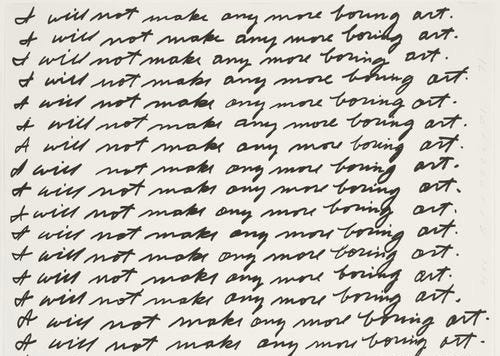
What Is Selling Out?
“Selling out is usually more a matter of buying in. Sell out, and you’re really buying into someone else’s system of values, rules and rewards. The so-called ‘opportunity’ I faced would have meant giving up my individual voice for that of a money-grubbing corporation. It would have meant my purpose in writing was to sell things, not say things. My pride in craft would be sacrificed to the efficiency of mass production and the work of assistants. Authorship would become committee decision. Creativity would become work for pay. Art would turn into commerce. In short, money was supposed to supply all the meaning I’d need.” - Bill Watterson
Franklin Leonard — a film/TV producer and the founder/CEO of the Black List — recently published THE MORAL CASE FOR “SELLING OUT”, in which he argues, among other things, that “the widest door leads to the highest art.” Leonard puts “selling out” in quotation marks, presumably because he believes what he describes is not actually selling out.
I encourage you to read the essay. My critique is about the “moral” framing of his argument, not the screenwriting tips (which are useful).
Were the essay titled HOW TO WRITE AND PITCH A COMMERCIAL SPEC SCRIPT, I would have no issue with it. I would’ve read it, learned a bit, and moved on with my day. However, Leonard goes much further.
“The film industry doesn’t just want commercial spec scripts right now. It needs them, desperately.
It’s existential, whether anyone wants to admit it on the record or not.”
In his argument, writing a commercial spec script is not just a way to make some money, get an agent, or book future gigs. No, the work is existential, urgent, a moral imperative.
Leonard writes:
“If you’re an aspiring professional screenwriter and you want this to be your job, write a commercial spec script.
If you’re working on something else, good. Truly. I’m not saying don’t ever write that, but I am saying that if your goal is to make screenwriting your job and not a hobby, put that aside for now and write something commercial first. You can always come back to the other thing after you’ve shown you can bring an audience with you.”
Ah, the dreaded H word. Either you are serious about a “career”, in which case you should prioritize writing a commercial spec script first, or you don’t care about being a “professional” screenwriter, it is just a “hobby” for you, in which case write whatever you want.
This is not bad advice for a certain person who wants a certain career. However, this either-or scenario barely glimpses the myriad of ways screenwriters can (and should) exist in the film landscape. Reality is so much more complex and full of possibilities than this false dichotomy suggests.
What Is A Professional, Anyway?
Every writer should have a general idea of why they write. Different writers are motivated by a variety of different and sometimes conflicting reasons. The “why” often shifts and changes over the course of our writing lives.
Some writers want to build haunted houses. Some want to ask deep questions. Some want to ask deep questions in haunted houses! Some write to make a living. Some write because it is their way of engaging with the world. Some writers are interested in classical storytelling. Some want to experiment and push the medium forward. Some gravitate towards adaptation. Some prefer writing original stories. Some start with research. Some start with imagination or personal experience. Some write to have fun and escape. Some use the process to learn, analyze and communicate. Some write hugs, meant to comfort us. Some write provocations, meant to challenge us.
All of these things are cool and in the ideal world we should create space for as many diverse approaches and motivations as possible, while also allowing for writers to change and grow.
This is clearly what Leonard wants too. But is it what Hollywood wants?
Here’s a question for all the writers out there:
Would you rather get paid to write stuff you don’t care about, or make a living doing something else and write stuff that excites you and has an equal (or better) shot of actually getting made and seen?
This is something we do not talk about nearly enough. There are plenty of quote-unquote “professional” screenwriters in Hollywood who have agents and managers and sell scripts and we have no idea who they are because NOTHING THEY HAVE WRITTEN AND/OR SOLD HAS EVER BEEN MADE.
I do not bring this up to rip on these folks — many of whom are my friends — but instead to point out that a big part of being a writer in the industry is getting paid to write stuff that never sees the light of day.
Some writers write for reasons that remain intact when they pursue an industry screenwriting career. But for others, the pursuit and its required creative compromises are antithetical to the reasons they write in the first place.
“Selling out is usually more a matter of buying in. Sell out, and you’re really buying into someone else’s system of values, rules and rewards.”
Some of us don’t care about presenting ourselves to Hollywood in the hopes they will anoint us to punch up their newest board game or action figure script. To the contrary, we think that the industry is cowardly, creatively soulless and irreparably broken. We do not want to dedicate our limited writing time to helping the gatekeepers. Who are they to decide what creative work is or is not valuable? Instead, we want to make cool shit and bring it directly to audiences and let them decide its worth.
"Led Zeppelin didn't write tunes everybody liked. They left that to the Bee Gees.” - Wayne Campbell
If a script cannot be cleanly boiled down to a single sentence, Leonard warns, “good luck using that script to break into a laughably competitive, capital-intensive medium where the product costs tens of millions of dollars to make and market.”
Where the product costs tens of millions of dollars to make and market.
What if that mindset is actually a big part of the problem? What if it’s gross and wasteful to spend tens of millions of dollars on most movies? To their own detriment, the industry and its chosen few all buy into and perpetuate the idiotic and self-destructive myth that there is a fixed correlation between the size of the budget and the value of the work.
What about screenwriters with scripts that would not cost tens of millions of dollars? What about projects in the $2-5 million range? What about scripts that would — gasp! — cost less than $1 million to make? What about the screenwriters of all the micro- and low-budget movies I saw in 2025? Are these movies less real? Less valuable? Are their writers hobbyists? Honestly, who cares?
Godard made several dozen feature films over the course of his career. The most he ever spent on a project was $1 million, and he only did that once (and most of that money went to Brigitte Bardot anyway).
My second feature — which I wrote, directed, produced and edited — is currently on the festival circuit (and just won an Audience Award at Philly JFM). My first feature played all over the world and is currently available to rent/buy and stream. I just did a reading of a new work-in-progress to a packed house. I founded and run a small business, which gives me the financial freedom to only work on projects I deem essential, regardless of budget. I’ve never sold a commercial spec script. I don’t have an agent or a manager. I work at a micro-budget level. I want the filmmaking process to feel like I’m making stuff with my friends as a teenager. Whether I’m a hobbyist or a professional is irrelevant because my work is being seen and engaged with by audiences.
I prefer the term AMAUTEUR anyway.
I am not anti-blockbuster or inherently against big budgets. I am against the idea that pros write eight-figure films and everyone else is a hobbyist. And I vehemently disagree with the choice to frame this narrow and wrong-headed perspective as a moral thing.
Has Hollywood Earned Your Trust?
“Earn the industry’s trust on its terms,” Leonard advises, “and you buy yourself the freedom to make whatever you think your best work actually is.”
This is giving contemporary Hollywood and the current crop of decision-makers far too much credit. Think about cool filmmakers who have emerged on the scene in the past 15 years. How many of them played the game and waited their turn until some gatekeeper gave them a shot? How many of them started with a commercial studio film and then got to make their passion project? I can’t think of many.
I suspect that when a screenwriter writes a successful commercial script, they get more offers to write different versions of that same script. The decision-makers rely on past successes to make future bets. They can’t really imagine anything beyond that.
“Coolness is not a renewable resource. It can only be sold once.”
- Vice Is Broke
The head honchos with the power to greenlight projects pretend to know what they’re doing. David Ellison literally says things like “‘Chris Pratt is a big star — let’s get him in a big action movie, and it’s gonna be big because it cost $250 million.” The decision-makers walk around acting like they know what kinds of movies audiences want, even though deep down they have no clue (google “hit movies passed on by studios” for countless examples). They demand stories and scripts that can be explained in one sentence because one sentence is simple enough to run against the backlog of what has worked previously. They struggle to imagine any future that is not a retread of past magic.
Here’s a radical thought: what if an over-reliance on single-sentence pitches is a bad thing? What if it’s bad for art, for critical thinking, for society AND for business? One sentence can only mean so much. Attributing significance to something so slight and nebulous can lead to uninformed and incorrect assumptions and claims (Leonard’s misinterpretation of Miyazaki, discussed in the following section, is an illustrative meta-example of this). A one-sentence pitch is at best a little hint, similar to a movie poster. Posters are a key part of marketing, but I wouldn’t encourage an aspiring writer to make decisions about which script to prioritize based on which concept is most easily conveyed on a poster.
And I would never argue that writing whatever script looks best on a poster is the most moral use of a writer’s time. Aspiring writers should write whatever they are most passionate about, because it is deep, unwavering passion first and foremost that leads to great art.
Miyazaki, In Context
Leonard bases his claim that “the widest door leads to the highest art” on a misreading of a decontextualized Hayao Miyazaki quote.
“A popular movie has to be full of true emotion, even if it’s frivolous. The entrance should be low and wide so that anyone can be invited in, but the exit should be high and purified. It shouldn’t be something that admits, emphasizes, or enlarges the lowness.”
This is from a 1988 interview. Miyazaki is making no claim about what is the “highest art”. That is purely and completely Leonard’s inference. Miyazaki himself draws an explicit distinction later in the interview:
“I think that our work as a popular culture is fundamentally different from such a terrifyingly radical thing as art or creation. Let’s not deceive ourselves by using such words as artist.”
Miyazaki is saying that “even frivolous popular movies” should take themselves seriously as honest expressions of the human experience, and that the best popular movies start in low, wide places — but do not revel in the lowness — and then transcend to higher, deeper places.
He continues:
“I don't like Disney movies. The entrance and the exit are lined up at the same low height and width. I can't help but feel that it looks down on the audience.”
Let us not forget that Miyazaki had to build his own studio to fully realize his vision, and that he turned down countless Hollywood offers, choosing again and again to make things with his trusted collaborators and without the permission or support of gatekeepers.
From that same interview:
“Today, I can't talk about our business without some bitterness. Compared to several works in the 1950s which inspired me, we in the 1980s make animation as if it's an in-flight meal served on a Jumbo Jet. Mass production has changed the situation. The true emotion and feeling that should be carried through have been replaced by a bluff, neurosis, or teasing. The craft that we should put our love into has been worn down in the piecework production system.”
The foundational claim of Leonard’s argument is undone by actually reading and thinking about what Miyazaki said in context.
Which leads to a question: did Leonard read the full interview with Miyazaki, or just find and repurpose an out-of-context quote to support his argument? If Leonard read the full interview, would he not see that it does not support, and in fact explicitly refutes, his claim that “the widest door leads to the highest art”?
Leonard — a Harvard grad and former McKinsey consultant — knows how to close-read a document. For that reason, I must assume he did not read the interview and instead cherry-picked the quote. If he had read it, he would know that Miyazaki draws a clear distinction between “popular culture” and “art”. In the quote that informs Leonard’s case, Miyazaki is simply saying that popular movies, even silly ones, should start in accessible places but aim for transcendence. He never calls “popular movies” art, let alone the “highest art”.
Miyazaki says “popular culture” but Leonard hears “art” (even when Miyazaki differentiates between the two). Miyazaki says “popular movies should start wide and aim high” and Leonard infers that “the widest door leads to the highest art.” Doesn’t this reveal in a funny and deep way how Hollywood thinks of itself?
Leonard’s misreading also ironically illustrates the issue with the industry’s troubling reliance on single-sentence pitches. If the Miyazaki quote was the pitch, the full interview was the script. Leonard read the pitch and shaped an opinion around it — or maybe shaped it around his opinion? — without cracking the script. And he ended up using a quote by Miyazaki to make an argument that is directly refuted and discredited by what Miyazaki says next.
I do not encourage aspiring screenwriters to spend their time prioritizing the whims of an industry full of people who think they only need to hear a sentence or two before forming an opinion.
As most children know, it is bad to judge a book by its cover. Yet Leonard tells us over and over again that this is Hollywood’s go-to development strategy, the foundation of how they make decisions.
And if you’re a “professional” who wants a “career” writing “products that cost millions to make and market”, you better buy in and play along.
The Moral Case For Doing You
Writing with your audience in mind is obviously a healthy practice. A movie without an audience does not exist. But what is selling out if not putting aside the thing you are most passionate about to prioritize the thing Hollywood wants?
If the script that matters most to you naturally aligns with what the industry wants, great! Write it, sell it, maybe it gets made. But don’t write it BECAUSE of its industry appeal. Write it because it excites you, because it brings you joy, because it makes you laugh, because it’s something you’ve never seen before, because it helps you process or understand something better, because it supports your growth as a person or an artist, because it might mean something to somebody.
Be honest and clear with yourself about your motivations and goals. The industry does not have the power or authority to tell you why you write.
If the story you are most passionate about is smaller, or challenging, or has a more niche audience, prioritize it anyway. Write with urgency and discipline and love. Life is too fragile and brief to waste time making meaningless shit.
Once you have a script that keeps you up at night, don’t wait for the permission of the gatekeepers. Learn how to direct and/or be your own producer. Dive into the rich history of micro-budget cinema. Watch everything you can. Start shooting stuff on your phone. Attend festivals and screenings and parties and workshops and performances. Hang out with cool artists. Find your collaborators.
Make stuff, hustle, learn, dream, repeat. Everything else falls into place. <3
Damon and Affleck last film is a perfect example of selling out to Netflix to make their $100 million movie "The Rip". I think it's arguably the worst tgebg they've ever done.
I can't even express how deeply the sentence, "Life is too fragile and brief to waste time making meaningless shit," resonates with me right now, having just quit my job as a well paid TV writer to go back to earning nothing to make indie films I actually care about.